How To Get Rid Of Moss In a Lawn & Reduce its Return

Moss is a common problem in UK lawns, particularly where grass struggles because of shade, prolonged moisture, compacted soil or poor growing conditions. Removing moss can improve your lawn's appearance, but understanding why it developed is equally important in reducing its return.
Quick answer: How do you get rid of moss in a lawn?
Identify what is encouraging the moss, then remove or reduce it through raking, scarifying or a suitable lawn treatment, such as iron based moss killer or bacteria-containing lawn-care product. Repair thin or bare areas afterwards and improve conditions such as drainage, shade and compaction. Encouraging healthy, dense grass growth is one of the most effective ways to reduce the likelihood of moss returning.
Why is moss growing in your lawn?
Moss establishes where conditions favour it over grass, particularly after wet winters when grass growth slows. Small amount of moss aren't necessarily a problem, but excessive moss can replace grass, leaving lawns thin, patchy and less resilient to everyday wear.
Before choosing a treatment, look at where your moss is growing and what may be restricting grass growth.
| What you notice | Possible cause | What to consider |
|---|---|---|
| Moss beneath trees, hedges or fences | Limited sunlight | Improve light or consider shade-tolerant grass seed |
| Moss where the ground remains wet | Poor drainage or prolonged moisture | Investigate drainage and soil conditions |
| Moss in worn or frequently used areas | Compaction and grass wear | Consider aeration and managing traffic |
| Moss where grass is cut very short | Weakened grass | Raise the mowing height |
| Moss amongst pale or slow-growing grass | Poor growth or inadequate nutrition | Review feeding and consider soil testing |
| Moss within a thick, spongy surface layer | Excessive thatch | Assess whether scarification is needed |
Thatch is a layer of living and dead grass stems, roots and organic material between the grass and the soil. Some is normal, but excessive accumulation can retain surface moisture and interfere with grass growth.
Does moss mean your lawn is acidic?
Not necessarily. Although some moss species favour acidic conditions, moss can also grow where the soil pH is suitable for grass.
Applying lime without knowing the soil's pH maybe unnecessary and could affect nutrient availability. Where acidity or nutritional imbalance is suspected, a soil test provides more of a reliable basis for treatment.
Check what's happening beneath the surface?
Two lawns with similar moss coverage may need very different approaches.
For example, moss beneath trees may be associated with shade and competition for moisture, while persistent dampness in an open lawn may suggest compaction or poor drainage.
You can make an initial assessment by comparing how easily a garden fork enters affected and healthy areas under similar moisture conditions. Examining a small core may also revel shallow rooting, excessive thatch or compacted layers.
Amenity Choice Technical Tip | Moss is often an indication that grass is struggling rather than the original cause. Understanding whether the main limitation is light, moisture, compaction or grass condition can help you choose the most effective treatment and optimise your results.
Compare moss-control methods
The best method depends on the extent of the moss, the condition of the remaining grass and whether you want immediate removal or gradual lawn improvement.
Which moss-control method is right for your lawn?
| Method | When to consider it | What to know |
|---|---|---|
| Raking or scarifying | Light moss or heavier accumulations requiring removal | Removes moss but doesn't correct the underlying cause |
| Iron-based moss killer or authorised lawn sand | Established moss requiring direct treatment | Moss typically blackens before removal |
| Weed, feed and moss-control fertiliser | Lawns affected by both moss and broad-leaved weeds | Combines moss and selective weed control with nutrients to support grass growth |
| Organic-based, bacteria-enriched lawn fertiliser | Gradual lawn improvement alongside nutrition | Helps break down dead moss and thatch while supporting healthy grass growth |
| Physical-action moss treatment | An alternative to traditional iron treatments | Works by smothering the moss and requires dry application conditions |
| Improving lawn maintenance | Reducing recurring moss problems | Encourages healthier grass and improves longer-term results |
Can you remove moss just by raking?
Yes. For light or localised moss, careful removal with a spring-tined rake may be sufficient. Heavier accumulations or excessive thatch may require a mechanical scarifier.
Avoid aggressive scarification when the ground is waterlogged or grass is unlikely to recover. Raking also won't prevent moss returning if the underlying conditions remain unchanged.
It can be helpful to feed the lawn after scarification to support grass recovery and growth.
For more detailed advice, see our How to Scarify a Lawn: When, Why and How guide
Which lawn moss treatment should you choose?
Moss treatments work in different ways, so consider how they control or reduce moss and how they fit into your wider lawn-care programme.
Iron-based lawn moss killers
Many traditional lawn moss killers contain iron sulphate (ferrous sulphate), which controls existing moss, typically causing it to blacken as it dies back. The dead material can then be removed by raking or scarifying, helping prepare the lawn for recovery.
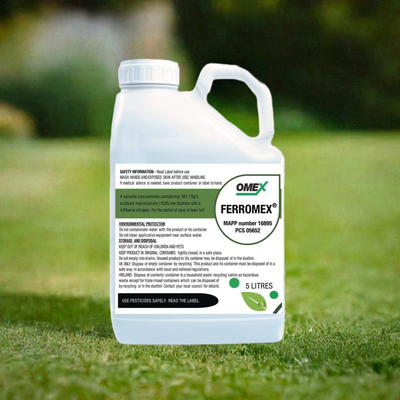
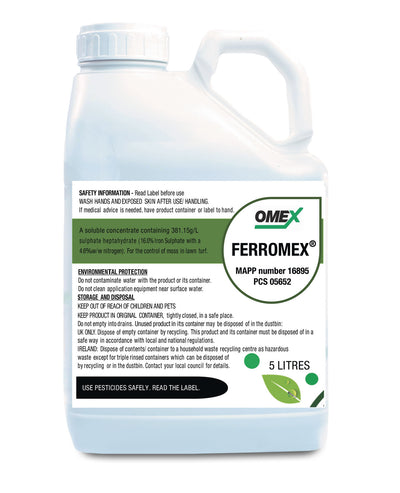
Ferromex® Lawn Moss Killer 5L is a liquid iron-based treatment that combines moss control with nitrogen to support grass growth. It is best applied from early spring to early autumn, when moss and grass are actively growing and soil temperatures are between 7°C and 21°C. Blackened moss can generally be removed after 7-10 days, following product guidance.
Weed, feed and moss-control fertilisers
Where moss and broad-leaved weeds are both affecting your lawn, a combined treatment can provide a practical solution. These granular products bring together iron-based moss control, selective herbicides and lawn nutrition to support healthier, denser grass growth.
Revival Feed, Weed & Moss Killer and Landscaper Pro Triple Action Feed, Weed & Moss Killer offer this combined approach, helping control susceptible lawn weeds such as daisies and creeping buttercups while feeding the grass.
Both are best used during spring or summer when grass and weeds are actively growing and soil conditions are suitable. If you are planning to overseed or renovate your lawn, check the product's restrictions first. Revival requires at least six weeks before reseeding or returfing.
Where moss is the main problem, a dedicated moss treatment may be more appropriate.
Organic-based, bacteria enriched lawn treatments
MO Bacter Organic Lawn Fertiliser offers a different approach to traditional iron-based moss killers.
This RHS endorsed, slow-release fertiliser combines Bacillus bacteria that help break down dead moss and thatch with a potassium-rich nutrient formulation (5-5-20 + 3% MgO), supporting grass growth for approximately 12 weeks.
MOBacter is a versatile lawn-care product, ideally applied in spring or early summer when soil temperatures reach 10°C or above, although it can also be used in late summer or early autumn to support turf health ahead of winter. Its gradual action can also save time by reducing the need to rake out dead moss, although heavier infestations may still require some physical removal.
Physical-action moss treatments
MossOff® Lawn Care Moss offers a non-biocide alternative to traditional based iron-based moss control.
Its biodegradable micro-coating covers the moss and restricts its ability to take up moisture and nutrients, causing it to dry out and die. Unlike iron-based treatments, it avoids the associated blackening and iron staining.
MossOff® Lawn Care Moss Killer 5L can be applied throughout the year when moss is dry and conditions allow the treatment to dry fully, ideally with 24 hours without rainfall. Visible results can typically be seen within 7-10 days, with further die back over the following 2-3 weeks. Thorough coverage and repeat applications are important, to achieve the optimum results, particularly if dense moss is present.
A note about iron fertilisers: Some iron containing products are designed to improve grass colour and nutrition rather than moss control. If moss control is your main aim, choose a product that is specifically authorised for this purpose.
You can explore our lawn and grass moss killers or speak to the Amenity Choice technical team for advice on the most suitable product.
Use any chosen moss control product correctly
Even a suitable moss treatment can deliver disappointing results if applied unevenly or under unsuitable conditions. Always check the manufacturer's instructions and where applicable the approved product label.
To get the best moss control results it helps to pay particular attention to:
- Product suitability: Check that the product is specified for lawns and approved for the intended use.
- Weather and moisture: Products have different requirements for rainfall, soil moisture and drying conditions.
- Application rate: Measure your lawn and apply the specific quantity using suitable equipment, applying more or stronger dilutions does not achieve better results. Conversely, applying too little will reduce the effectiveness of any treatment.
- Watering and mowing: Follow the recommended intervals before carrying out subsequent lawn maintenance.
- Staining: Iron-based treatments can stain paving, patios and other hard surfaces, take care when applying.
- Children and pets: Follow specific instructions and if unsure consult with the Amenity Choice technical team
- Reseeding: Check, before application, if there is a waiting period before sowing new grass seed
What equipment do you need?
Using the right equipment will help you apply treatments consistently and avoid missed or over treated areas.
For granular products, a Handy Green Hand Held Spreader can be useful for smaller lawns, while a wheeled spreader is generally more practical for larger areas. You can also explore our spreader range to find a product that suits your needs.
Liquid moss control products require suitable application equipment, such as a watering can attachment or compatible garden or knapsack sprayer, where recommended.
A tip from the professionals: A spreader doesn't automatically guarantee the correct application rate. Granule size, walking speed, and equipment calibration all influence accurate distribution. It is advised to always check the recommended settings and calibrate where necessary to achieve even coverage.
What is the best time to treat moss in UK lawn?
Spring and early autumn are generally useful periods because conditions can support treatment, grass recovery and renovation. However, as with most garden and grounds maintenance projects, actual timing depends on the product, soil temperature, moisture and active grass growth.
Spring: Remove winter moss and support grass recovery
Spring provides an opportunity to assess moss that developed during the winter and begin treatment as grass growth improves.
Choose from the treatments mentioned, depending on the lawns condition. Once moss has been managed, appropriate nutrition can also help strengthen the remaining grass.
Viano Lawn Boost 16-3-8 is a spring/summer fertiliser containing nitrogen, magnesium, iron and beneficial bacteria. It supports growth, colour and thatch breakdown rather than acting as a dedicated moss killer.
Why does spring nitrogen matter? Nitrogen (N) the first number in NPK fertiliser analysis, supports green leaf growth and recovery. However, additional nutrition cannot compensate for severe shade, water logging or compacted soil.
Autumn: Manage moss and prepare the lawn for recovery
Early autumn can provide favourable conditions for moss removal, aeration and overseeding while soil temperatures remain suitable for grass establishment.
If renovation is planned, chose a moss treatment compatible with reseeding and allow sufficient time for the work before winter.
Once the lawn has recovered, suitable autumn nutrition can help maintain grass conditions.
Viano Autumn Lawn Treatment 6-6-16 is an organic based fertiliser containing higher potassium. added magnesium and Humifirst. It supports established turf through cooler months rather than providing direct moss control.
Why is autumn feeding different? Potassium (K), the third number in NPK analysis, contributes to water regulation and plant stress responses. Autumn feeds often have different nutrient balance from spring products, reflecting the seasonal growing needs for the grass.
In either season, choose fertilisers according to the lawn's condition and/or soil analysis rather than assuming moss automatically indicates a nutrient deficiency.
Our full range of spring, summer and autumn fertilisers can be discovered in Fertilisers - Shop by Season
Remove material and restore grass cover
Once moss has been treated or removed, your lawn may appear thinner than expected, particularly if moss previously occupied much of the area.
Should you rake out the dead moss?
This depends on the treatment.
Iron based products typically leave blackened moss that can be removed once the treatment has worked. RHS approved Mo Bacter supports the gradual breakdown of organic material including dead moss and thatch, potentially reducing the need for raking. Physical action products including MossOff®, usually require some raking to remove the moss once it has died, particularly for heavy infestations. Alternatively physical action moss control can be combined with bacteria enriched lawn treatments such as MO Bacter to both target living moss and remove dead moss and thatch.
Where heavy accumulations of excessive thatch remain after treatment, scarification may still be useful when growing conditions allow recovery.
Will grass grow back?
Where healthy grass remains, some natural recovery is possible. However, if moss has replaced much of the turf, overseeding or renovation maybe needed.
| Lawn condition | Recommended next step |
|---|---|
| Healthy grass with small gaps | Encourage natural recovery through suitable maintenance |
| Thin or patchy grass | Overseed to improve grass density |
| Large bare areas | Consider more substantial reseeding or renovation |
Choose grass seed suited to the lawn's conditions and intended use. For shaded lawns, a shade-tolerant mixture may be appropriate, provided sufficient light is available.
Good seed-to-soil contact is essential. Seed sitting on thick thatch or dead moss may struggle to establish.
Our How to Overseed a Lawn: A Step-by-Step Guide explains preparation, sowing and recovery
Amenity Choice Technical Tip: Removing moss creates space but doesn't replace it with grass. Where turf density is poor, overseeding helps rebuild grass cover and reduce opportunities for moss to re-establish.
Reduce regrowth through routine care
Longer-term moss management depends on maintaining conditions that favour healthy grass growth. Anyone carrying out moss control should initially focus on what may be the causes before carrying out treatment.
Improve drainage and relieve compaction
Where soil compaction restricts root growth or water movement, aeration may improve growing conditions and reduce the presence of moss.
Solid tines create openings in the soil, while hollow tines remove small soil cores and may provide greater compaction relief. However, persistent water logging can involve deeper drainage problems and aeration alone won't resolve it.
For further guidance, see our How to Aerate a Lawn: Compaction, Solid Tines and Hollow Tines Explained
Adjust your mowing height
Repeatedly cutting grass too short can weaken it, particularly in shaded or stressed areas.
For many family lawns, a mowing height around 25-50 mm (1-2 inches) may be suitable depending on grass type and conditions.
Improve light and manage shaded areas
Where practical, selectively pruning nearby trees or shrubs can improve sunlight and airflow. Shade-tolerant grass seed may also help compete against moss, provided enough light reaches the lawn.
In heavily shaded areas, maintaining grass may remain difficult. Accepting some moss or considering alternative ground cover can be more practical than repeated monthly or yearly treatments.
Can moss be prevented permanently?
No treatment can guarantee permanent moss prevention. Cool, damp conditions and weakened grass can always potentially allow it to re-establish.
The aim, if you wish to reduce moss, is to maintain a healthy, dense turf while correcting the conditions that encourage excessive moss.
You've removed the moss in your lawn, what's your next step?
If moss removal has left your lawn thin or patchy, restoring grass cover is the next priority.
Our How To Renovate a Lawn in Autumn: A Step-by-Step Guide explains when scarification, overseeding and feeding may be appropriate.
For help choosing a treatment or planning lawn recovery, the Amenity Choice Technical Team can provide guidance on suitable approaches and products.
Expert Lawn Advice from Amenity Choice
Written by: Amenity Choice Technical Team
Technical review: E. Smith
BASIS Certificate in Crop Protection - Amenity Horticulture Turf
Landscape and IVM Manager Amenity Choice / Agrovista UK Ltd
Amenity Choice is operated by Agrovista UK Ltd. Customers can access advice from our experienced BASIS and FACTS trained technical advisers by phoning on 01952 641949
Always read and follow product labels and application instructions before use.
Related Products