The Paddock & Pasture Care Guide: Weed Control and Grass Health
Maintaining a safe, productive paddock is a year-round commitment. Whether you are managing a small pony paddock, grassland or extensive equestrian grazing, the goal is the same: a dense, nutritious grass sward that can naturally outcompete invasive species.
Our collection of professional paddock weed killers is curated to help you remove in some instances toxic and competitive weeds while protecting the health of your grass.
Why Selective Weed Control Matters
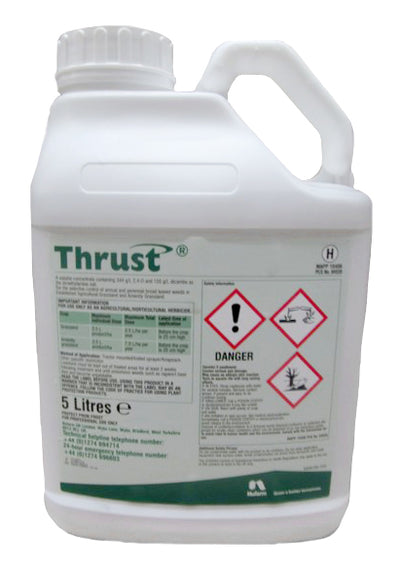
In a grazing environment, broad-spectrum killers aren't an option because they would destroy the grass itself. We provide selective herbicides—formulated with active ingredients like Fluroxypyr and Triclopyr—which are designed to identify the physiological difference between a weed and a blade of grass.
These treatments travel through the weed's leaves and down into the deep root systems, ensuring that stubborn perennials like Docks and Thistles are killed off completely, rather than just losing their top growth.
Key Targets for Equestrian Safety
For horse owners, weed control is often a matter of animal welfare. Our range focuses on the species that pose the greatest risk to grazing livestock:
- Common Ragwort: A high-priority target. Controlling Ragwort at the rosette stage (before it flowers) is essential to prevent it from becoming a hidden danger in hay or grazing.
- Buttercups: Often a sign of wet or compacted soil, these can quickly dominate a paddock and are unpalatable to horses.
- Nettles & Brambles: These "encroaching" weeds reduce the usable grazing area and can lead to skin irritation or injury in tight spaces.
The Role of Fertilisers in Weed Management
It is a common misconception that you should only "kill weeds." In reality, a weed is often just a symptom of a nutrient deficiency in the soil.
Does fertiliser help? Yes. By applying balanced Paddock & Equestrian Fertilisers (typically a low-nitrogen/high-phosphate and potash mix), you encourage the grass to "tiller" or spread. This fills in the bare patches left behind after a weed has died, physically blocking new weed seeds from reaching the soil. Without nutrition, your weed control efforts will be short-lived as the ground remains open for reinvasion.
Application Equipment for Precise Treatment
How you apply the product is just as important as the product itself. To get the best results and ensure you are using the correct dose, we recommend matching your equipment to your acreage:
- Spot Treatment (Knapsack Sprayers): If you only have a few patches of Ragwort or Nettles, knapsack sprayers allow for surgical precision and accurate application. This saves money on product and prevents "overspraying" healthy grass.
- Nozzle Choice: Always use Low-Drift Nozzles. This ensures the herbicide lands on the weed and doesn't drift into your hedges, water troughs, or neighbouring gardens.
The Paddock Recovery Cycle
For the best long-term results, follow this simple management loop:
- Identify: Check for toxic species , or weeds that you want to control like Ragwort.
- Treat: Apply selective herbicide when weeds are actively growing (usually Spring or Autumn).
- Feed: Once weeds begin to yellow, apply Paddock & Equestrian Fertilisers to kickstart grass recovery.
- Overseed: If large gaps remain, use a specialist Equestrian & Paddock Seed mix to restore the sward density.
By treating the cause (poor grass health) alongside the symptom (weeds), you create a sustainable, high-quality grazing environment for your horses.
Maximising Spray Efficiency - Getting The Best Results: Additives, Safety, and Precision
Professional paddock maintenance is about more than just the herbicide; it’s also about ensuring every drop of product works as intended. To get the best value from your treatment and ensure the highest safety standards, consider these three critical factors: Water Quality, Visibility, and Protection.
1. Water Conditioners and pH Fixers
The water you use to dilute your herbicide can actually work against you. In many parts of the UK, "hard water" contains high levels of calcium and magnesium. These minerals can bind to the active ingredients in selective herbicides, partially neutralising them before they even hit the weed.
Using a pH Fixer or Water Conditioner in your spray tank "softens" the water and adjusts the pH level. This prevents the herbicide from being "locked up" by minerals, ensuring the full strength of the chemical is available to be absorbed by the plant. It’s an inexpensive way to guarantee that your high-quality herbicide performs at 100% efficacy.
2. Blue Marker Dyes for Precision
One of the biggest challenges in a large paddock is knowing exactly where you have already sprayed. Overlapping leads to wasted product and potential grass "scorch," while missing spots leaves weeds to seed and spread.
Incorporating a Blue Marker Dye, such as Eye SPI Spray Pattern Indicator, into your spray mix provides a temporary visual map of your progress.
- Eliminate Waste: You only spray what is necessary.
- Identify Missed Patches: Clearly see any rosettes or clumps you’ve bypassed.
- Safety: The dye fades within 24–48 hours through UV exposure, but provides immediate peace of mind that you haven’t missed a toxic weed like Ragwort.
3. Mixing for Success: Only What You Need
A key rule of professional grassland management is to only mix what you intend to use. Once a herbicide is mixed with water, it begins to degrade. Leaving a diluted mix in a sprayer overnight can lead to:
- Reduced Potency: The chemical may no longer be effective the following day.
- Equipment Damage: Settled chemicals can clog nozzles and corrode pump seals.
- Environmental Risk: Storing "ready-to-use" liquid in a tank increases the risk of accidental leaks.
Always calculate your area (m² or hectares) first, and calibrate your sprayer to ensure you are mixing the exact volume required for that specific job.
Personal Protective Equipment (PPE) & Safety
When handling professional-grade concentrates, your safety and the safety of your environment are paramount. Even when using selective products, "Best Practice" dictates a minimum level of Personal Protective Equipment - PPE to prevent dermal absorption or inhalation:
- Gloves: Use Nitrile gloves (not latex or fabric) when handling and measuring concentrates.
- Coveralls: Wear a disposable or washable chemical-resistant suit (Type 5/6) to protect clothing from splashes.
- Face Protection: A Face Shield or Safety Goggles (Safety Faceshields & Headwear) should always be worn during the mixing and filling process to protect against accidental splashes to the eyes.
- Footwear: Use rubber wellington boots rather than leather boots, as leather can absorb chemicals and hold them against your skin.
Pro Tip: Always keep a clean supply of fresh water nearby while spraying. If any chemical contact occurs, immediate irrigation of the skin or eyes is the most effective first-aid measure.
Technical Quick-Reference
Grazing Intervals: Always check the product label for the "Grazing Interval." This is the mandatory period horses must be kept off the treated area—usually between 7 and 14 days, or until toxic weeds like Ragwort have completely died back, become unpalatable and removed.
Water Volume: Most professional herbicides require a specific dilution rate (e.g., 200L of water per hectare) to ensure the leaf is sufficiently "wetted" for absorption.