Bat Boxes and Wildlife Habitat in Landscaped Areas
Bat boxes play an important role in enhancing biodiversity across gardens, residential estates, industrial developments, and sports and amenity areas by providing essential roosting opportunities where natural habitats may be limited. Designed as artificial roosting spaces, they provide shelter for bats where natural features such as tree cavities or old buildings are limited. In the UK, where habitat loss has reduced available roosting sites, installing bat boxes is a practical and responsible way to support local wildlife populations.
For landscapers, estate managers and environmentally conscious gardeners, bat boxes offer a simple yet effective addition to planting schemes and habitat creation projects. Whether integrated into tree lines, woodland edges or on buildings they offer a more balanced and ecologically stronger outdoor space.
Supporting Biodiversity and Natural Pest Control
Bats are highly beneficial within managed landscapes, feeding on a wide range of flying insects including moths, midges and mosquitoes. Encouraging bats into a landscape can l also naturally reduce insect populations, supporting a more balanced ecosystem and the potential reduction and reliance on chemical interventions
The presence of bats is also a strong indicator of how well the environment is thriving. They are sensitive to changes in habitat, light levels and pollution, so their presence and activity suggests that a landscape is functioning well from an ecological perspective. Introducing bat boxes alongside considered planting and habitat features such as wildflower meadows and gardens, can significantly improve biodiversity across both domestic gardens and larger commercial grounds.
Bat Box Design and Construction Materials
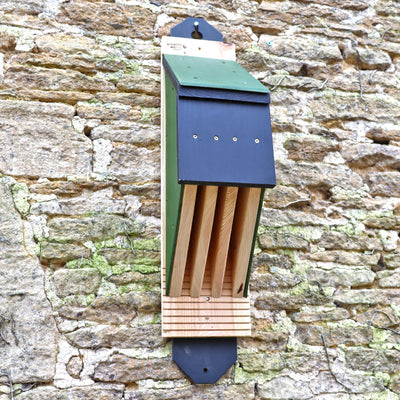
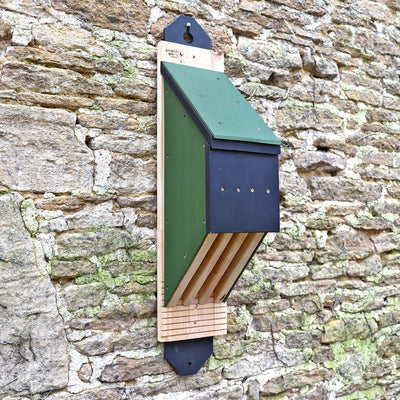
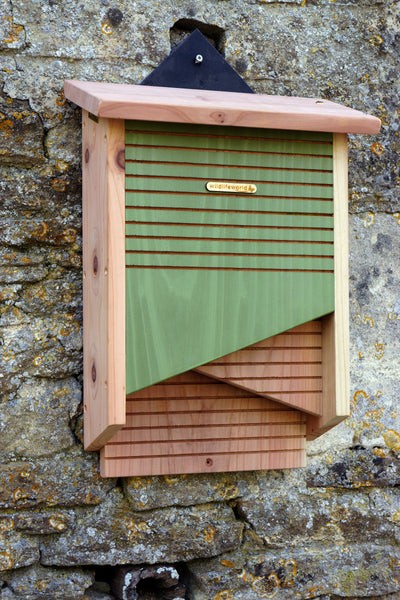
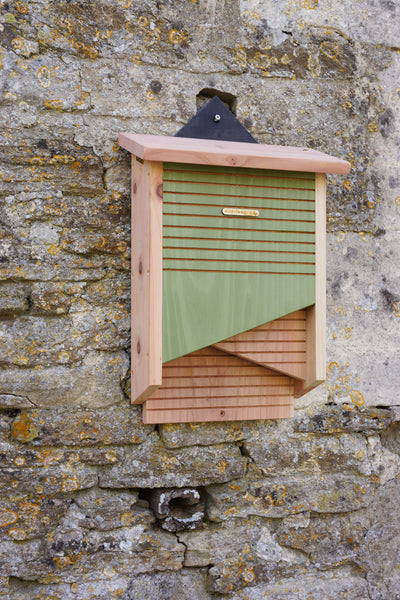
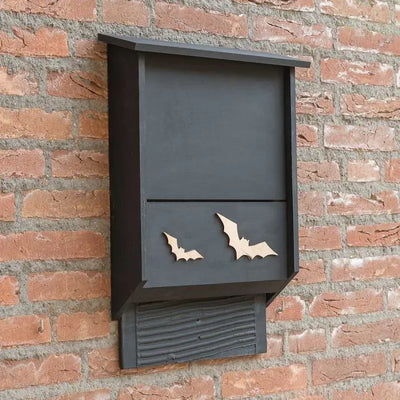
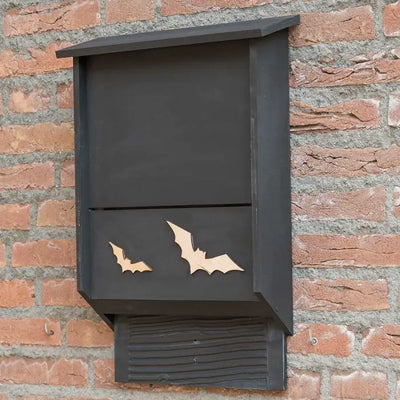
Effective bat boxes are designed to replicate the sheltered, stable conditions found in natural roosts. Key features include narrow entrance slits, rough internal surfaces for them to grip on and well-sealed construction to maintain a consistent internal climate. Bats prefer environments that are free from draughts, with stable temperature and humidity levels.
Timber, Woodcrete and Recycled Materials
Products available in the collection are constructed from a range of materials, each suited to different applications. Traditional timber bat boxes are widely used, particularly as they are constructed from rough sawn, untreated wood to avoid harmful chemicals. More advanced systems use woodcrete or recycled composite materials, offering improved durability, insulation and longevity in exposed environments and are equally enjoyed as a bat habitat.
Material choices for bat boxes are particularly relevant in professional landscaping projects where long-term performance is essential. Durable construction ensures that bat boxes remain effective for many years without frequent maintenance, making them suitable for estate grounds, parks and commercial developments.
Placement and Installation of Bat Boxes in Landscape Projects
Correct positioning is critical to the success of bat boxes. They should be installed at height, typically at least four metres above ground level, in locations that offer shelter from strong winds and exposure to sunlight for part of the day. Positioning near tree lines, hedgerows or water features can improve uptake, as these are common flight paths and feeding areas for bats.
In practical terms, installation often involves fixing boxes to mature trees, buildings or dedicated posts. Care should be taken to ensure a clear flight path beneath the box, allowing bats to drop into flight. Avoid placing boxes near strong artificial lighting, as this can deter bats and increase predation risk.
When attaching bat boxes to trees, care should be taken to use methods that minimise the risk of damage to the tree.
From a landscaping perspective, bat boxes are typically incorporated during the design or enhancement phase of a project. They can be discreetly placed within woodland planting schemes, along boundary hedges or integrated into built structures to complement any environment.
Integrating Bat Boxes into Landscape and Maintenance Programmes
Bat boxes are most effective when integrated into a broader habitat and landscape strategy. A well designed scheme may begin with establishing diverse planting, such as using wildflower seed to attract pollinating insects. It could also include creating species-rich lawns or increasing the diversity of the plants and trees within targeted areas.
Within this wider approach, bat boxes support ecological balance rather than turf performance, contributing to natural insect control and enhancing biodiversity across the landscape.
This integrated approach reflects and shows a way modern landscape management can combine visual quality with environmental responsibility, particularly across estates, public spaces and residential projects.
Bat Box Installation: Seasonal Considerations
Bat boxes can be installed at any time of year, provided ground and access conditions are suitable. However, installation is often carried out during quieter periods in the landscaping calendar, such as autumn and winter, allowing time for bats to locate and explore the boxes ahead of the active spring and summer months.
It is important to understand that occupancy is not immediate. Bats may take months or even years to adopt a new roost, and patience is essential. Once occupied, boxes should not be disturbed, as all bat species and their roosts are legally protected in the UK.
Bat Boxes in Professional Landscape Settings: Gardens, Estates and Commercial Landscapes
Bat boxes are widely used across a range of environments, from private gardens and paddocks through to large-scale estate grounds and commercial landscaping projects. In domestic settings, they are often positioned on houses or mature trees to encourage wildlife into the garden. In larger schemes, they form part of biodiversity strategies linked to planning requirements or environmental stewardship.
For landscape contractors, the inclusion of bat boxes demonstrates a commitment to sustainable design and ecological enhancement. They are frequently specified alongside other habitat features such as bird boxes, insect hotels & bug walls and native planting schemes, helping to create layered habitats that support a wide range of species.
By incorporating bat boxes into landscape design, professionals can deliver outdoor spaces that are not only visually refined but also ecologically functional, aligning with modern expectations around biodiversity and environmental responsibility.