Insect Hotels and Pollinator Habitat Structures
Insect hotels and bug walls are a practical feature in modern landscape design, helping to support biodiversity across gardens, estates and managed outdoor spaces. These structures provide nesting and overwintering habitat for beneficial insects such as solitary bees, ladybirds and lacewings, which all play an important role in pollination and natural pest balance. Explore our wider Wildlife & Habitat collection for more habitat solutions.
As natural habitats continue to decline, adding dedicated insect shelter to planting schemes is a considered way to support wildlife and improve ecological value. The collection includes professionally designed insect hotels and modular bug wall systems built for long-term durability and consistent use by pollinating insects.
What Makes a Good Bug Hotels and Insect Wall
The effectiveness of an insect hotel depends heavily on its materials and internal structure. High-quality designs use a combination of natural and engineered materials such as hardwood timber, bamboo canes, drilled logs and recycled composites. Each material creates different microhabitats, helping to support a wider range of insect species.
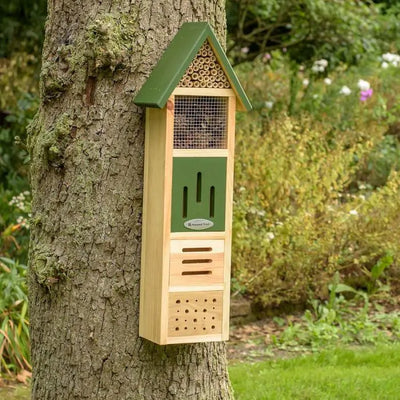
Compartmentalised designs are particularly effective, offering varied hole diameters and sheltered cavities suited to solitary bees and other beneficial insects. Strong outer frames, often made from durable timber or composite boards, provide weather resistance and help the habitat remain functional across multiple seasons.
In larger landscape projects, bug walls extend this concept by combining several habitat elements into a single feature. They are well suited to commercial landscaping, estate grounds and public-facing spaces where ecological value and visual impact are both important.
Biodiversity, Pollination and Ecosystem Balance
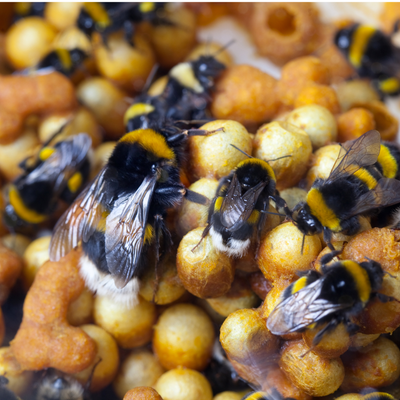
Pollinator habitat plays an important role in healthy planting schemes and successful landscape establishment. Solitary bees are highly efficient pollinators and depend on sheltered nesting sites close to flowering plants. By introducing suitable habitat, landscapes can support better pollination and a more balanced ecosystem.
These features also help encourage beneficial insects such as ladybirds, which support natural pest control by feeding on aphids and other soft-bodied pests. For landscape professionals and grounds managers, insect hotels offer a straightforward way to improve biodiversity and strengthen the ecological value of a site.
Supporting Insect Activity Through Planting Design
Habitat works best when it is paired with the right planting. Establishing flowering areas with grass seed mixes or wildflower planting creates a reliable source of nectar and pollen throughout the growing season. For wider habitat-friendly planting options, explore our Grass & Wildflower Seed and 100% Wildflower Mixes collections.
Designing with flowering borders, meadow-style planting and naturalised margins helps create the conditions insects need to thrive. This approach supports biodiversity while also bringing seasonal colour and texture into the landscape. For additional planting inspiration, see our wildflower seed range.
Integrating Insect Hotels into Landscape Design
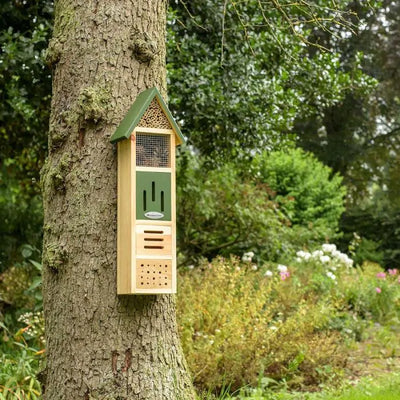
Insect hotels and bug walls are most effective when considered at the design stage rather than added later. Positioning should be chosen carefully, with south or south-east facing locations often preferred to maximise warmth and insect activity. Sheltered positions near planting beds, hedgerows or meadow areas give insects easy access to food sources while helping protect the habitat from strong winds.
In professional landscape projects, these features are often used alongside planting schemes, natural boundaries and structural elements to create a cohesive and biodiverse design. They can be placed as visible focal points in wildlife areas or integrated more discreetly within planting to support habitat value without dominating the space.
For landscapers, estate managers and serious gardeners, insect hotels and bug walls are a practical way to improve biodiversity while supporting the long-term health of a site. When combined with thoughtful planting and wider habitat design, they help create outdoor spaces that are both attractive and ecologically valuable.
Related Habitat Products
Insect hotels work especially well as part of a broader wildlife strategy. To build a joined-up habitat offer, consider linking this page to our Hedgehog Houses and Bird Boxes collections, which support other important garden wildlife species.