Professional Pre-Seeding Fertilisers & Seedbed Preparation
Successful turf establishment begins beneath the surface. The Pre-Seeding Fertilisers that Amenity Choice offer are specifically formulated to optimise soil chemistry prior to sowing.
Unlike standard maintenance feeds, pre-seed fertilisers (often called "Starter Fertilisers") prioritise Phosphorus (P) which helps to accelerate primary and secondary root architecture, ensuring rapid seedling anchorage along with long-term drought resistance.
The Science of Seedling Establishment
Early-stage turf development, is not as simple as just putting the seed down and just letting it germinate, it also requires a specific nutritional profile that differs significantly from established lawn fertilising requirements:
What does a new lawn & seedling need to grow well?
- High Phosphorus (P): This is essential for ATP (energy) transfer within the seedling and rapid root elongation.
- Targeted Nitrogen (N): Provided in controlled doses to support initial leaf emergence without overstimulating "lush" growth.
- Potassium (K): Regulates osmotic pressure and cell wall turgidity, protecting tender new shoots from environmental stress.
Technical Comparison: Pre-Seed vs. Maintenance Fertilisers
While both products provide essential nutrition, their physiological targets are distinct. A Pre-Seeding Fertiliser is engineered specifically for primary root architecture and seedling anchorage. In contrast, standard Autumn/Spring Maintenance Fertilisers are formulated to drive chlorophyll production for leaf colour and cellular lignification for blade strength.
This functional difference is reflected in the NPK Analysis:
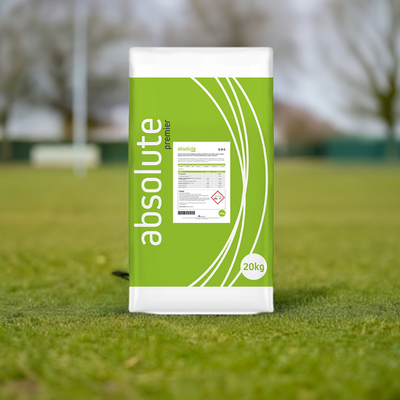
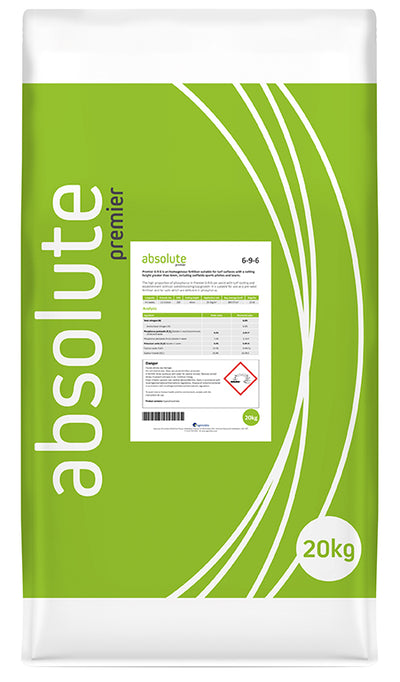
Pre-Seeding Formulations: Feature high Phosphorus (P) ratios (e.g., 6-9-6) to facilitate ATP energy transfer during the high-stress germination phase.
Seasonal Maintenance Feeds: Prioritise Nitrogen (N) for vegetative surge or Potassium (K) for winter hardiness and turgidity.
Furthermore, professional pre-seed starters often incorporate bio-stimulants such as Zeolite or Mycorrhizae these serve to enhance Cation Exchange Capacity (CEC) and symbiotic fungal colonisation. Standard seasonal feeds typically rely on high-purity mineral salts for rapid, predictable nutrient release.
Strategic Application for Professional Results
For all turf / lawn projects, how you approach it is critical as seedbed preparation is key to long-term healthy grass. Success in new lawn and turf establishment is not 'just' about grass seed; it is also about the environment in which that seed is placed.
How to seed a lawn
STEP 1 - Seedbed Preparation:
Remove debris and cultivate the topsoil to a fine tilth. This gives compaction relief - utilising aeration or raking prevents what is known as 'panning' which can inhibit the downward growth of the first root. It also helps to ensure maximum seed-to-soil contact.
STEP 2 - Nutrient Incorporation (Fertiliser)
Apply granular pre-seed fertiliser ideally using a calibrated spreader. Rake into the upper soil profile to ensure nutrients are exactly where emerging seed roots (radicles) can intercept them.
STEP 3 - Sowing
Apply grass seed immediately after fertilising to reduce the "establishment gap." If you want a uniform turf it is suggested that the 'Cross-Pass' Technique is used. This is where half the seed is sown in one direction and the remaining half at 90° to ensure 100% coverage without 'stripping'
STEP 4 - Hydration Management
Once the seed and pre-seed fertiliser are in place, it is essential that a consistent moisture film is available for the seed as this triggers the vital biochemical action from being a dormant seed to having active growth.
Seasonal Timing & Environmental Optimisation - When To Use a Pre-Seeding Fertiliser
Pre-seeding fertilisers are most effective during active growing windows:
- Spring (March–May): Maximises the "flush" of growth as soil temperatures rise above 8-10°C.
- Late Summer/Early Autumn (August–September): The gold standard for turf establishment, utilising residual soil heat for rapid rooting before winter dormancy.