Flower Bedding Fertilisers and Soil Fertility
Flower bedding fertilisers are essential for meeting the physiological demands of high-impact floral displays in professional landscaping, estate management, and domestic borders. Whether managing intensive seasonal bedding or established perennial herbaceous borders, the application of targeted flower and bedding fertilisers supports soil nutrient availability and ensures consistent flowering performance throughout the growing season.
At the core of plant nutrition is the supply of essential macronutrients—Nitrogen (N), Phosphorus (P), and Potassium (K). A high-quality NPK fertiliser for bedding plants uses a specific ratio to balance vegetative growth with reproductive performance. Nitrogen facilitates chlorophyll production and leaf expansion; Phosphorus is critical for ATP-mediated energy transfer and strong root development; while Potassium regulates osmotic balance and enzyme activation, directly influencing flower quality, petal strength, and environmental stress tolerance.
Most professional-grade bedding plant fertilisers are formulated as granular fertilisers, slow-release fertilisers, or controlled-release fertiliser (CRF) technologies. These delivery systems ensure that nutrients are released into the soil solution at a rate that aligns with plant uptake, helping to prevent "luxury consumption"—where plants absorb nutrients beyond their immediate requirements, that can often lead to soft, susceptible growth.
The Role of Macronutrients in Flowering Performance
In bedding schemes, nutrient balance must be carefully managed. While Nitrogen is necessary for initial vegetative establishment, an oversupply during the flowering phase can result in excessive foliage at the expense of bud development. For this reason, many flower fertilisers used in the amenity sector feature elevated levels of Potassium and appropriate levels of Phosphorus to support and sustain the reproductive phase.
Phosphorus (P): Essential for early-stage establishment, encouraging rapid root branching and effective establishment after transplanting.
Potassium (K): Often referred to as the “quality” nutrient, it strengthens cell walls, supports water regulation, and improves tolerance to drought and environmental stress—making it a key component in high-potassium fertilisers for flowering plants.
Micronutrients: Professional formulations often include Magnesium (a key component of chlorophyll, supporting photosynthesis) and Iron (essential for chlorophyll synthesis, helping to prevent interveinal chlorosis and maintain healthy green foliage). These are commonly included in premium granular fertilisers and controlled-release fertilisers.
NPK Balance and Bedding Plant Nutrition
Professional grounds teams often integrate lawn & garden fertilisers into a single management plan. While the requirements of turf and flowering plants differ, the objective remains the same: maintaining a structured soil profile where nutrients are readily available (bioavailable) within the root zone.
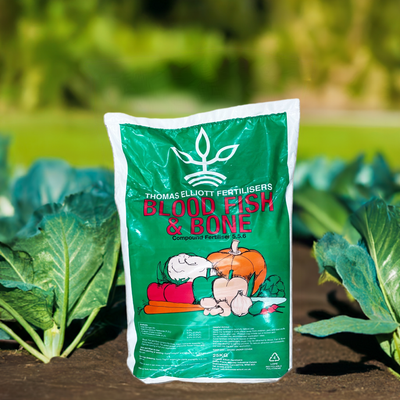
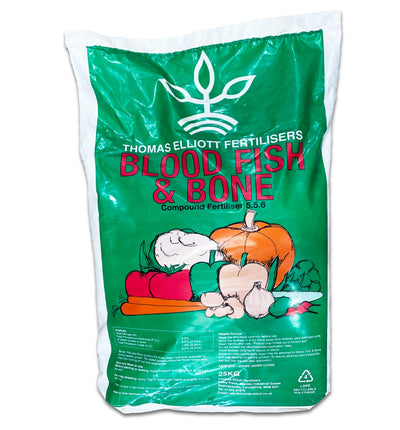
In managed amenity soils, consistent fertiliser inputs help maintain nutrient availability within the soil solution. Incorporating organic fertilisers such as fish, blood and bone, or seaweed fertilisers and biostimulants, introduces organic matter that supports beneficial soil microbial activity. This organic matter can also contribute to improving soil structure and cation exchange capacity (CEC), enhancing the soil’s ability to retain essential nutrients over time.
Slow-Release and Granular Fertiliser Technologies
Slow-release fertiliser technology is widely used for high-traffic or commercial flower beds where frequent manual feeding is not practical. These products release nutrients in response to environmental factors such as soil temperature and moisture, providing a steady supply over an extended period—ideal for low-maintenance bedding displays.
Granular fertiliser remains a staple due to its precision and ease of application. When applied using professional lawn spreaders, it ensures uniform nutrient distribution across large areas, reducing the risk of uneven growth often associated with inconsistent application. Controlled-release fertilisers (CRFs), typically polymer-coated, offer extended longevity and are often preferred for commercial landscaping projects, municipal planting, or high-end residential landscapes.
Professional Bedding Plant Fertiliser Programmes
In a professional context, fertilisation forms part of an Integrated Pest Management (IPM) or Integrated Crop Management (ICM) strategy. Success begins with effective soil preparation, often involving soil conditioners to improve drainage, aeration, and structure. Once this foundation is established, fertilisers support plant establishment and ongoing performance.
A comprehensive maintenance programme typically includes:
- Soil Conditioning: Improving the physical structure and organic content of the bed using soil improvers and conditioners
- Base Dressing: Incorporating a granular fertiliser or organic fertiliser into the soil prior to planting
- Top Dressing: Seasonal applications using granular fertilisers which include slow-release or controlled-release formulations to maintain plant vigour
- Ancillary Care: Using wetting agents, irrigation support products, and targeted weed control to reduce nutrient competition
By using professional-grade equipment such as calibrated fertiliser spreaders, managers can ensure accurate application rates and a consistent transition between turf and ornamental planting areas, reducing the risk of over, or under, fertilisation.
Seasonal Applications for Maximum Impact
Spring Fertilisers: Match nutrient requirements indicated from a soil analysis focus on higher-phosphorus starter fertilisers to support root development during early growth and establishment.
Summer Fertilisers: Shift towards high-potassium fertilisers for flowers to sustain flowering performance and improve tolerance to heat and drought stress.
Autumn Fertilisers: In perennial borders, late-season feeding with NPK fertilisers in a ratio of 3-1-2 supports root development and the accumulation of carbohydrate reserves within crowns and bulbs, promoting stronger regrowth the following season.
Selecting the Appropriate Flower Bedding Fertiliser
Selecting the right flower bedding fertiliser requires careful assessment of soil type, plant species, and the desired longevity of the display. High-impact seasonal planting schemes in urban environments often benefit from controlled-release fertilisers that maintain consistent performance under stress, while traditional herbaceous borders may respond well to a combination of granular fertilisers and organic amendments.
When choosing a product, professional landscapers prioritise NPK analysis, granule size for even distribution, and the nutrient release profile. Matching these characteristics to site conditions ensures a healthy, visually consistent landscape that performs from initial planting through to the end of the season.