Grass Seed and Wildflower Seed for Professional Landscape Establishment
Grass and wildflower seed form the foundation of successful landscape establishment, whether creating high-quality lawns, restoring worn turf areas or developing biodiverse wildflower spaces. Choosing the right grass seed or wildflower mix is critical to achieving long-term performance, visual appeal and suitability for the intended environment.
This collection includes a wide range of seed options designed for different applications, from hard-wearing amenity lawns to lower maintenance wildflower areas. For landscapers, estate managers, groundsmen and serious gardeners, selecting the correct species mix ensures reliable establishment and sustainable results across both domestic sports and commercial outdoor spaces.
Grass Seed and Turf Establishment
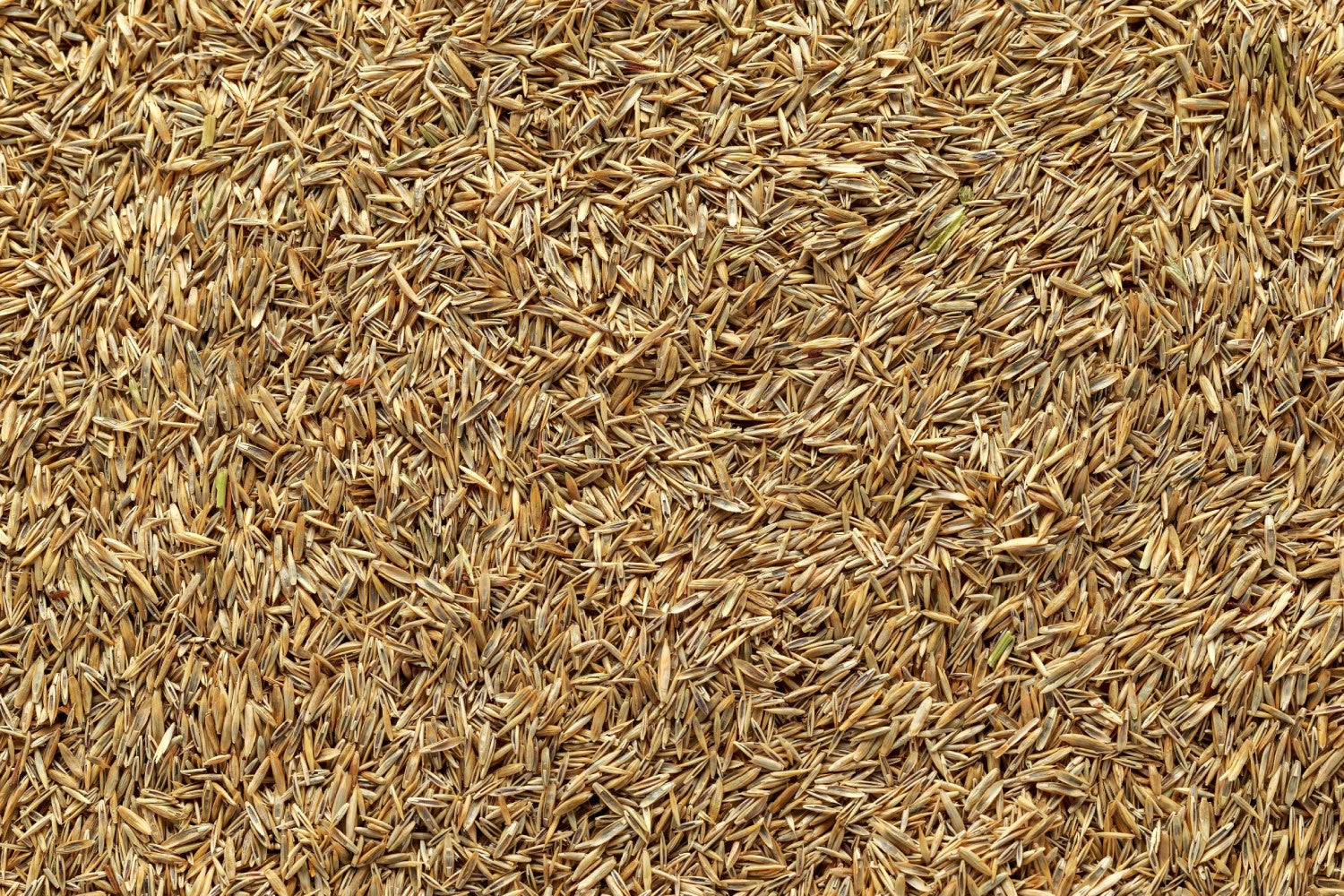
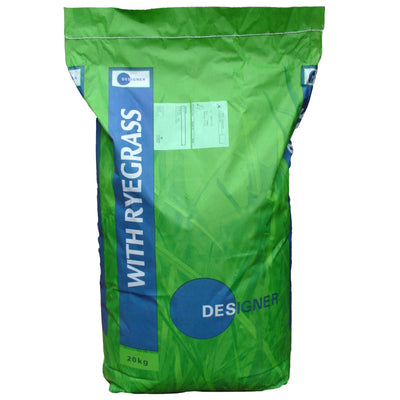
Successful lawn establishment begins with selecting a grass seed mixture suited to the site conditions and expected usage. Modern seed blends are carefully formulated using species such as perennial ryegrass, different fescues and bent grasses, each contributing specific characteristics including durability, fineness of leaf and tolerance to wear or shade.
Perennial ryegrass is often used where rapid germination and strong establishment are required, while fine fescues provide a denser, more refined finish suited to ornamental lawns. Bent grasses may be included in specialist mixes where a finer texture and close mowing are desirable. The balance between these species determines how the turf performs over time.
Soil Preparation and Nutrient Requirements
Before sowing, proper ground preparation is essential. Creating a level, well-structured seedbed encourages even germination and consistent coverage. Incorporating soil conditioners can improve soil structure, aiding water movement and root penetration, along with reducing compaction all of which are key to successful establishment.
Early-stage nutrition plays a significant role in getting your turf off to a good start. Applying a suitable lawn & garden fertiliser, such as a pre-seeding fertiliser, ensures that young seedlings have access to essential nutrients such as Nitrogen, Phosphorus and Potassium. These support root development, shoot growth and overall plant strength, helping new lawn and turf areas establish quickly and evenly.
Maintaining adequate moisture is equally important. In challenging conditions, wetting agents can help regulate water distribution within the soil, improving germination rates and reducing the risk of dry patch during establishment.
Grass Seed for Paddocks and Grazing Areas
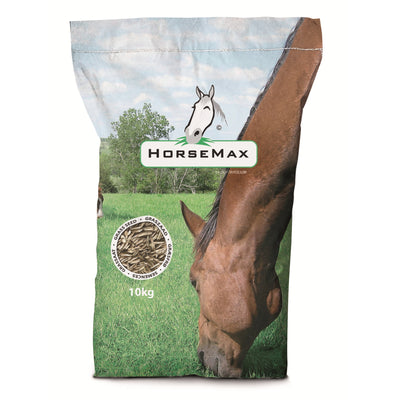
In paddock environments, grass seed selection focuses on durability, recovery and suitability for grazing animals. Unlike ornamental lawns, paddocks are subject to consistent wear, poaching and nutrient variation, particularly in high-traffic areas such as gateways and feeding zones.
Seed mixtures for paddocks typically include strong perennial ryegrass varieties for rapid establishment and wear tolerance, often combined with hardy fescues to improve sward density and persistence. These blends are designed to cope with repeated use while maintaining adequate ground cover, helping to reduce mud formation and improve overall surface stability.
Establishment or overseeding in paddocks follows similar principles to lawn seeding but often requires more robust preparation. Addressing compaction, levelling uneven ground and ensuring good seed-to-soil contact are all essential steps. In many cases, overseeding is carried out as part of a wider paddock renovation programme, including weed control and fertiliser applications, to restore thinning or damaged areas.
Managing Soil Fertility and Recovery in Paddocks
Maintaining the right soil nutrient balance is critical for paddock performance. While grazing animals contribute organic matter, nutrient distribution is often uneven, leading to patchy growth. Applying appropriate paddock & equestrian fertiliser or tailored fertiliser products helps support consistent grass development and recovery after wear.
Incorporating soil conditioners can improve soil structure, particularly in compacted or heavily used areas, supporting better drainage and root development. This contributes to a more resilient sward capable of withstanding seasonal pressures. It is recommended that these are applied little and often in spring, summer and autumn to achieve the best results.
Regular overseeding with grass seed is also recommended to help maintain density, particularly after winter or periods of heavy use. This helps ensure paddocks remain productive, visually tidy and functional throughout the year.
Wildflower Seed and Biodiversity Planting
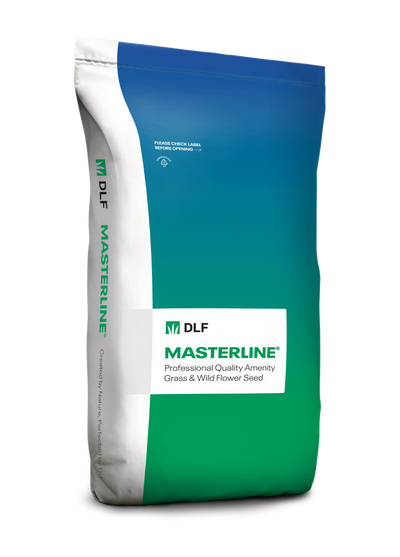
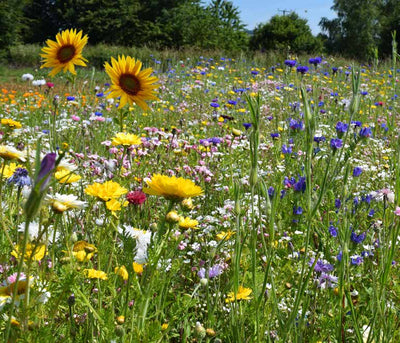
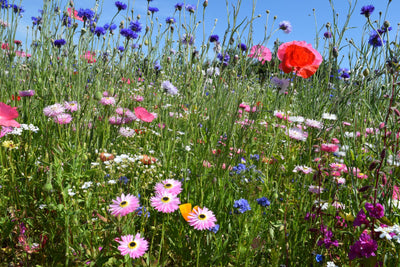
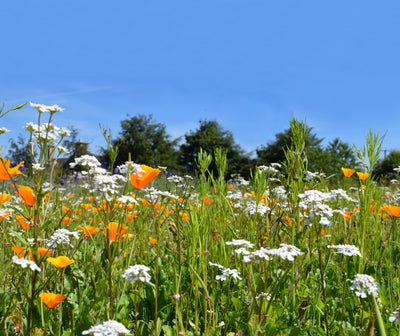
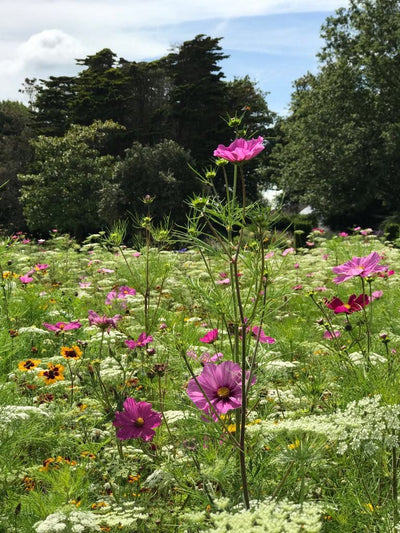
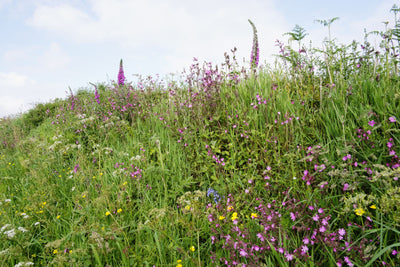
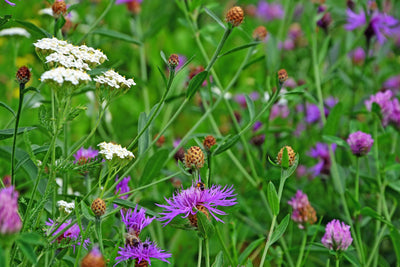
Wildflower seed mixtures are increasingly used within landscaping to create visually striking and ecologically valuable areas. These mixes combine a range of native grasses and flowering species, providing seasonal colour while supporting pollinators and local biodiversity.
Unlike traditional lawns, wildflower areas are typically managed for lower fertility conditions. Excessive nutrients can favour grass dominance, reducing floral diversity. For this reason, wildflower establishment often involves reducing soil fertility or selecting sites with naturally poorer soils.
Species Selection and Establishment Techniques
Wildflower mixes vary depending on the desired outcome, from annual displays that deliver quick colour to perennial mixes designed for long-term, low-maintenance planting. Selecting the appropriate mix depends on soil type, light levels and the intended visual effect.
Establishment requires careful preparation, including removing existing vegetation and creating a fine, firm seedbed. Sowing rates must be accurate to avoid overcrowding, and ongoing management typically involves controlled cutting regimes to maintain balance between grasses and flowering species.
In larger schemes such as estate grounds or commercial landscapes, wildflower areas are often integrated alongside maintained turf, providing contrast while reducing long-term maintenance inputs.
Integrating Seed into Landscape and Lawn Care Programmes
Grass seed and wildflower seed play a central role in both new landscape projects and ongoing maintenance. In lawn renovation, overseeding with grass seed is commonly carried out after scarification or moss control treatments to restore density and improve surface quality.
A typical programme may involve preparing the soil with soil conditioners, sowing or overseeding with high-quality grass seed, supporting establishment with lawn & garden fertiliser, and maintaining surface quality through weed control (once the sward is established) and ongoing lawn care products. Accurate application using professional lawn spreaders ensures even distribution and consistent results across larger areas.
Wildflower seed, while managed differently, also fits within broader landscape planning. It is often used to complement formal lawn areas, creating a balanced scheme that combines structured turf with natural planting zones, while paddock areas are maintained separately with more durable seed mixtures suited to grazing and wear.
Seasonal Timing for Grass and Wildflower Seed
Timing is critical when working with both grass seed and wildflower seed. Spring and early autumn are generally the most favourable periods for sowing grass seed, as soil temperatures and moisture levels support rapid germination and establishment. These windows allow young plants to develop before periods of environmental stress.
Wildflower seed is often sown in autumn or spring, depending on the species mix. Autumn sowing can improve germination for certain native species by exposing seeds to natural cold conditions, while spring sowing allows for quicker establishment in warmer soils.
During summer, establishment can be more challenging due to dry conditions, requiring careful irrigation and moisture management. Winter sowing is less common but may be used in specific situations where ground conditions allow and the grass seed is appropriate for the conditions.
By aligning sowing with seasonal conditions and selecting the right seed mix, both turf and wildflower areas can be established successfully, delivering long-term performance and visual impact across a wide range of landscapes.
Choosing the correct grass seed or wildflower seed mix ensures that every landscape project starts with a strong foundation. With the right preparation, product selection and ongoing management, these seeds provide reliable establishment, improved surface quality and enhanced biodiversity across lawns, paddocks and wider landscaped environments.