Grass Seed and Turf Establishment for Professional Landscapes
Grass seed is central to the successful creation and long-term performance of lawns, amenity areas, and managed grassed spaces. Whether establishing new turf or improving worn or thinning surfaces, selecting the correct grass seed mixture directly influences durability, visual quality, and ongoing maintenance requirements. At Amenity Choice, the focus is on supplying professional-grade solutions where grass seed is chosen based on site conditions, expected wear, and the practical realities of landscape management.
The performance of any grass seeds is determined by species selection and how well that mix aligns with the intended use. Factors such as wear tolerance, drought resilience, leaf fineness and recovery rate all contribute to the overall quality of the sward. A well-balanced mixture improves turf density, reduces weed ingress, and supports consistent grass health across both domestic and commercial environments.
Grass Species, Germination and Early Establishment
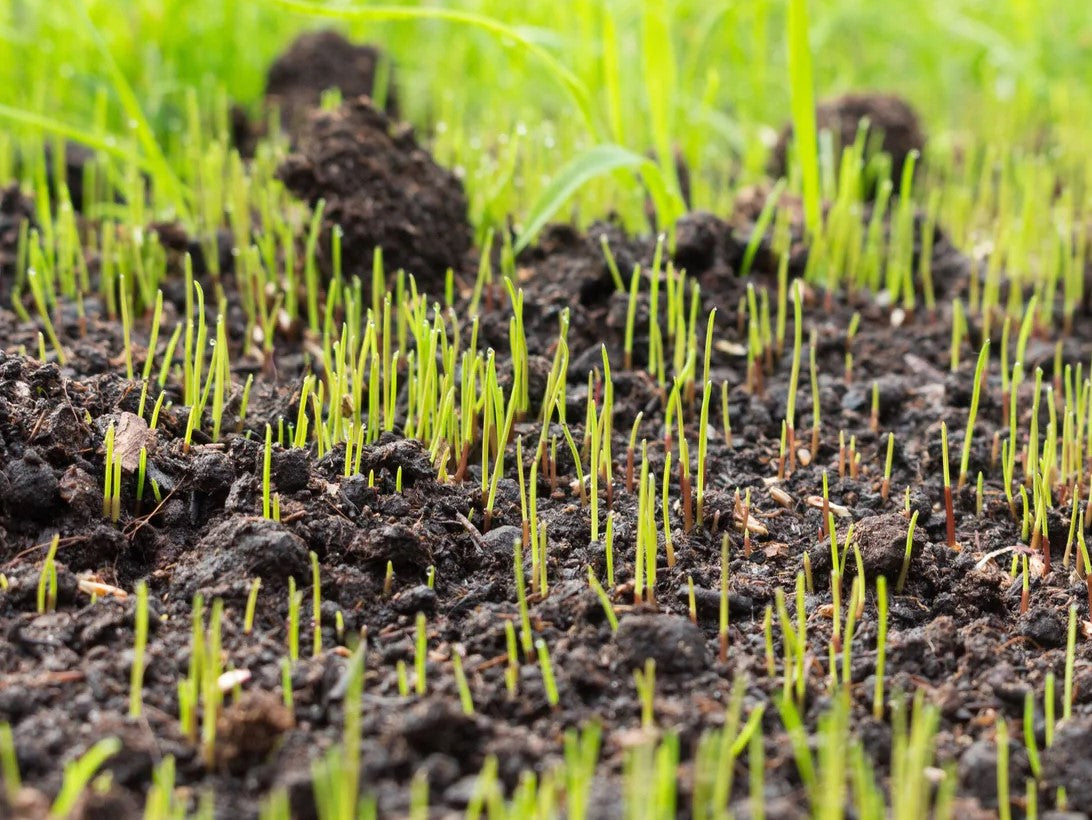
Understanding how different grass species behave during germination is key to achieving reliable establishment. Perennial ryegrass is widely used for its rapid germination and strong wear tolerance, making it suitable for high-use areas and paddocks. Fine fescues, by contrast, establish more gradually but deliver a denser, finer sward with improved tolerance to lower fertility soils, making them ideal for ornamental lawns and landscaped areas.
Germination success is influenced by soil temperature, moisture availability, and seed-to-soil contact. In practical terms, this means preparing a firm, level seedbed with a fine tilth that allows consistent contact between the seed and soil surface. Poor preparation often leads to uneven germination, patchy coverage, and reduced sward density. Maintaining adequate moisture through the early stages is equally important to support uniform establishment and encourage strong root development.
In paddock and smallholding environments, grass seed mixtures are typically selected for resilience under grazing and variable ground conditions. These blends prioritise hard-wearing species that recover quickly, helping maintain ground cover and reduce soil exposure over time.
Soil Fertility, NPK Balance and Turf Nutrition
The success of grass seed establishment is closely linked to soil fertility and nutrient availability. The balance of nitrogen, phosphorus and potassium within the soil directly affects seedling development and long-term turf performance. Nitrogen supports leaf growth and colour, phosphorus drives root development during early establishment, and potassium improves plant strength and stress tolerance.
Pre-Seeding Fertiliser how they help to establish grass seed germination
Applying a pre-seeding fertiliser is standard practice in professional landscaping. These formulations typically contain elevated phosphorus levels to encourage rapid root anchoring and efficient nutrient uptake. When applied alongside grass seeds, they ensure young plants have immediate access to essential nutrients, leading to faster establishment and a more competitive sward.
Beyond initial establishment, maintaining soil nutrient balance through seasonal feeding supports consistent turf nutrition. This helps sustain grass health, improves recovery from wear, and contributes to a stable, visually uniform surface across landscaped areas.
Grass seed application equipment
Accurate application plays a significant role in the success of any grass seed project. Uneven distribution can result in inconsistent germination, visible striping, and areas of weak establishment. Using professional lawn spreaders allows operators to apply seed at a controlled and consistent rate, whether working on smaller garden areas or larger-scale grounds.
Drop spreaders are suited to precise work along edges and borders, while rotary spreaders provide efficient coverage across wider spaces. Calibrated equipment ensures the correct application rate is achieved, protecting both seed performance and overall project quality.
Integrating The Use of Grass Seed Within a Complete Turf Programme
Grass seed is most effective when used as part of a structured turf establishment and maintenance approach. A typical programme begins with site clearance using appropriate weed control, followed by cultivation and the use of soil conditioners to improve soil structure and drainage. Once the seedbed is prepared, grass seeds are applied alongside a starter fertiliser, often followed by top dressing to enhance seed-to-soil contact and protect the seed during germination.
In paddock and larger landscape settings, combining correctly selected equestrian & paddock seed with pre-seeding fertiliser and calibrated spreaders ensures consistent establishment across uneven or heavily used ground, reducing the risk of patchy coverage and improving long-term surface stability.
After establishment, ongoing maintenance focuses on preserving turf density and surface quality. This may include targeted moss control, continued weed management, and the use of lawn care products to maintain nutrient balance and support consistent growth. Where conditions are dry or free-draining, wetting agents can also be introduced to improve moisture distribution within the soil profile.
When is it best to sow grass seed?
Grass seeds can be sown throughout much of the year, although generally it is recommended that spring and autumn remain the most effective periods for establishment. In spring, increasing soil temperatures and daylight hours promote rapid germination and early growth. Autumn offers particularly favourable conditions, with warm soil and consistent moisture supporting strong root development ahead of winter.
During summer, establishment can still be successful where irrigation is available to maintain moisture levels. In cooler months, germination slows as soil temperatures drop, making timing an important consideration when planning seeding works. Aligning grass seed application with seasonal conditions ensures stronger establishment, improved sward density, and more consistent long-term performance.